


PRESENTATION – ORP Congress 2024
Work and OSH in the Age of Artificial Intelligence: A Labyrinth of Complexity
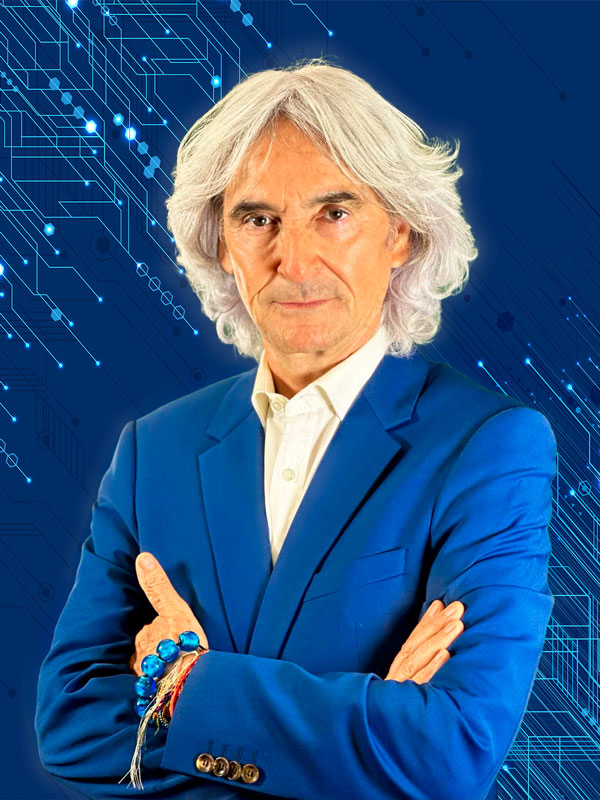
In a world where the emergence of Artificial Intelligence (AI) in the workplace redefines the boundaries and nature of work, we are compelled to rethink the very foundations of human labour. What constitutes work? How are working conditions and Occupational Health and Safety (OHS) transforming in this new era? These questions invite us on a journey through the labyrinth of complexity, seeking a balance between life and work.
The conceptualisation of work is an elusive definition per se, which has always navigated between nebulous definitions. The disparity between professions, such as that of a virtuoso pianist and a crab fisherman in Alaska, is already a matter of profound debate. Are we talking about the same ‘work’ when we compare such extremes?
In exploring the multidimensionality of Working Conditions and OSH measures for each profession, we are confronted with classic complex problem solving: fuzzy objectives and ambiguities. The challenge lies in delineating and addressing these complexities.
Complexity: An Innovative Approach: In the face of complexity, there is a need for an innovative perspective. This implies an elasticity in our understanding and a differential approach to address OSH in an effective and contemporary manner.
Today’s OSH Challenge is facing an unprecedented challenge in OSH, where there is no one-size-fits-all solution. Factors such as longevity of work, new skill requirements, and the emergence of a renewed work ethic shape a work ecosystem of uncertainty and fragility.
Distinguishing the Complicated from the Complex: Complex problems, such as the systematic implementation of AI, differ from previous ‘complicated’ problems. There are no universal solutions, and tackling them will require decades to stabilise and adapt to emerging tensions in diverse sectors and cultural and economic contexts.
We will need to draw on Complex Problem Solving techniques and methodologies such as Design Thinking and System Thinking to address the classification of types of work, associated risks and incomplete or unreliable observations. Our usual approach, based on heuristics and subjective judgements, needs to evolve to reduce the inherent complexity of OSH.
A long and challenging road lies ahead to establish workplaces that are: Healthy, Safe, Sustainable, Sensitive and Unique. These spaces should embrace individual differences, allowing work to be harmoniously integrated into our lives. In our commitment as ORP Foundation “One Life, One Planet,” we seek to create a work environment that not only adapts to the demands of the present, but also anticipates and shapes the future of work.
From Santiago de Chile, we embark on this collective reflection, with the aim of discovering those vanishing points that will allow us to design the work perspectives we long for. Together, we will strive to find solutions that harmonise with the complexities of our times, setting the course towards a more humane and adaptable future of work.
This journey through the labyrinths of Work and OSH in the age of Artificial Intelligence invites us to question, innovate and evolve. It is not only a challenge, but also a unique opportunity to redefine what it means to work and live in an increasingly interconnected and technologically advanced world.
Director ORP